


Pangea Stellar · 12 November 2026 · 5 min read
India’s business ecosystem is experiencing structural transformation, fueled by steady macroeconomic expansion, rising domestic consumption, and continuous regulatory modernization. While many individuals and institutions typically engage with India's growth through secondary stock market trading, an increasingly important mechanism is taking center stage: company-level investment in India.
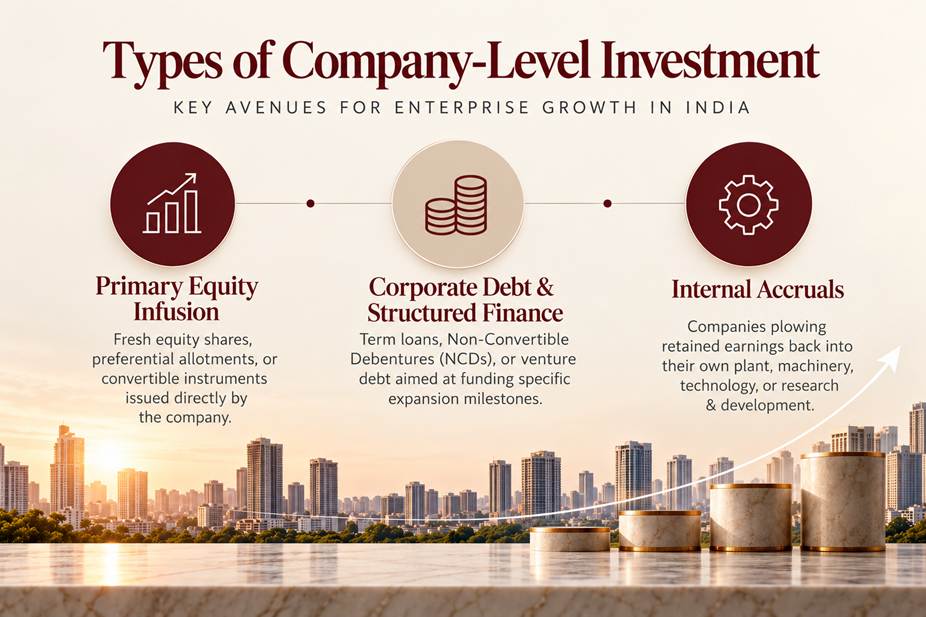
Company-level investment—frequently referred to as direct enterprise capital allocation or corporate-level investment—involves deploying capital directly into an operational business balance sheet or enterprise equity structure. Whether through equity infusions, strategic debt, venture capital, or corporate capital expenditure (Capex), investing directly at the entity level empowers enterprises to construct core productive assets, scale operations, and drive multi-year value creation.
Understanding how company-level investment functions, its strategic advantages, and key risk management principles is vital for entrepreneurs, business owners, family offices, and investors aiming to participate directly in India's corporate story.
What is Company-Level Investment in India?
Company-level investment in India refers to capital infused directly into an operating entity or enterprise structure to fund core business operations, acquire fixed assets, develop infrastructure, or expand market presence. Unlike secondary market investing—where an investor purchases existing shares on an exchange without adding fresh capital to the balance sheet—company-level investment represents primary capital.
How Company-Level Investment Works
Executing a direct company-level investment involves structured planning, rigorous evaluation, and formal compliance procedures under Indian corporate law:
- Strategic Evaluation & Valuation: The process begins with evaluating the enterprise's underlying asset value, market potential, and capital needs. The company and potential investors negotiate valuation metrics and determine the capital instrument—such as equity shares, Compulsorily Convertible Preference Shares (CCPS), or debentures.
- Term Sheet & Legal Structuring: A formal term sheet outlines capital infusion terms, governance rights, board representation, anti-dilution clauses, and exit provisions.
- Due Diligence & Regulatory Filings: Comprehensive financial, legal, tax, and operational due diligence is conducted. Following settled terms, funds are transferred into the corporate treasury, followed by regulatory allotment filings.
- Execution & Governance: Capital is deployed according to approved corporate budgets. Ongoing board governance and monitoring ensure long-term alignment.
Key Benefits of Company-Level Investment
● Business Growth and Expansion: Direct financial backing supplies patient capital for multi-year scaling. Companies can expand manufacturing capacity, build distribution networks, enter international markets, and launch new product lines without cash flow bottlenecks.
● Diversification of Investments: For high-net-worth individuals, family offices, and institutions, company-level investments provide real asset class diversification. Direct participation across unlisted entities, specialized manufacturing, logistics, healthcare, or deep-tech reduces reliance on volatile secondary equity indexes.
● Better Capital Allocation: With committed enterprise capital, leadership can execute structured capital allocation—addressing high-return projects, replacing expensive short-term debt, and optimizing operational cash flows.
● Long-Term Wealth and Value Creation: Direct entity investments prioritize enterprise value compounding over short-term speculative gains. As the business builds market share, expands EBITDA, and acquires valuable physical or IP assets, intrinsic company value grows substantially over time.
● Access to Exclusive Opportunities: Investing directly at the company level unlocks access to early-stage innovations, private mid-market growth stories, and strategic buyout opportunities unavailable to public retail investors.
Risk Management and Critical Considerations
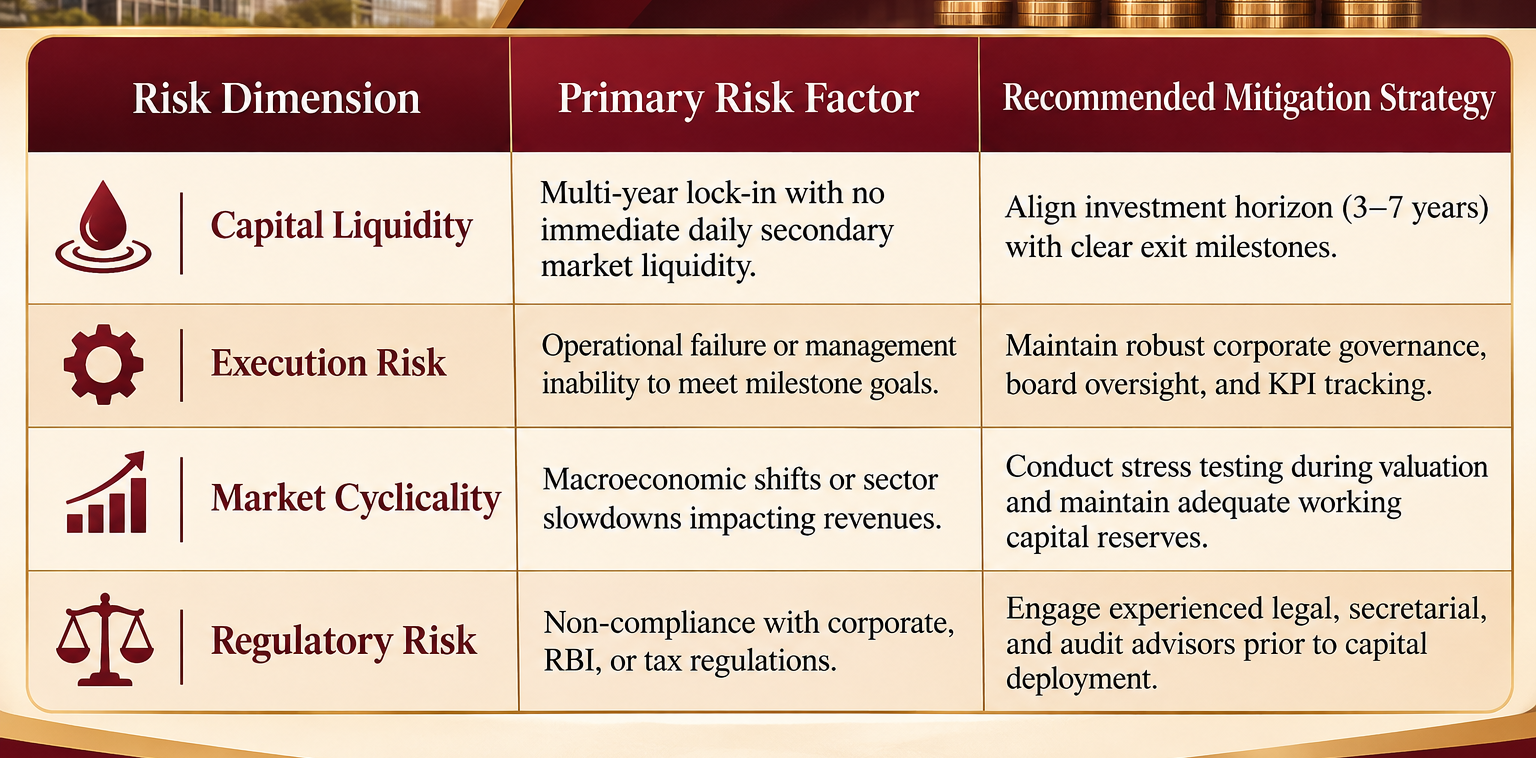
Direct enterprise investments offer considerable growth upside, but require careful risk mitigation across key operational and structural dimensions:
Factors to Evaluate Before Making an Investment
● Promoter Integrity & Governance: Evaluate the operational track record, transparency, and background of the founders and executive management team.
● Quality of Earnings & Balance Sheet: Audit existing debt obligations, working capital cycles, cash conversion rates, and revenue reliability.
● Competitive Advantage & Market Opportunity: Verify whether the business possesses a defensible market positioning, cost leadership, or proprietary technology.
● Clear Exit & Liquidity Pathways: Define expected exit routes upfront—such as an Initial Public Offering (IPO), strategic corporate acquisition, secondary sale, or promoter buyback.
Regulatory and Compliance Considerations in India
● The Companies Act, 2013: Regulates share issuances, private placements, board oversight, valuation requirements, and shareholder rights.
● RBI & Foreign Exchange Management Act (FEMA): Governs foreign direct investment (FDI), cross-border capital flows, and sectoral caps.
● Securities and Exchange Board of India (SEBI): Sets guidelines governing listed entities, Alternative Investment Funds (AIFs), and venture capital.
● Taxation Laws: The Income Tax Act dictates corporate tax rates, capital gains tax treatment on exits, and withholding tax obligations.
Who Can Consider Company-Level Investment?
Company-level investment is an effective approach for several corporate and private market participants, including:
● Entrepreneurs & Business Owners seeking growth capital.
● Angel Investors & Family Offices seeking direct unlisted equity.
● Corporate & Strategic Investors seeking integration or joint ventures.
● Private Equity & Venture Capital Funds deploying structured growth capital.
Q&A Section
Q1: How does company-level investment differ from secondary market stock purchases?
A: Secondary stock purchases involve acquiring existing shares from another investor on an exchange. Company-level investment flows primary capital directly into the enterprise balance sheet to fund business assets and growth.
Q2: What are internal accruals, and how are they used in enterprise investment?
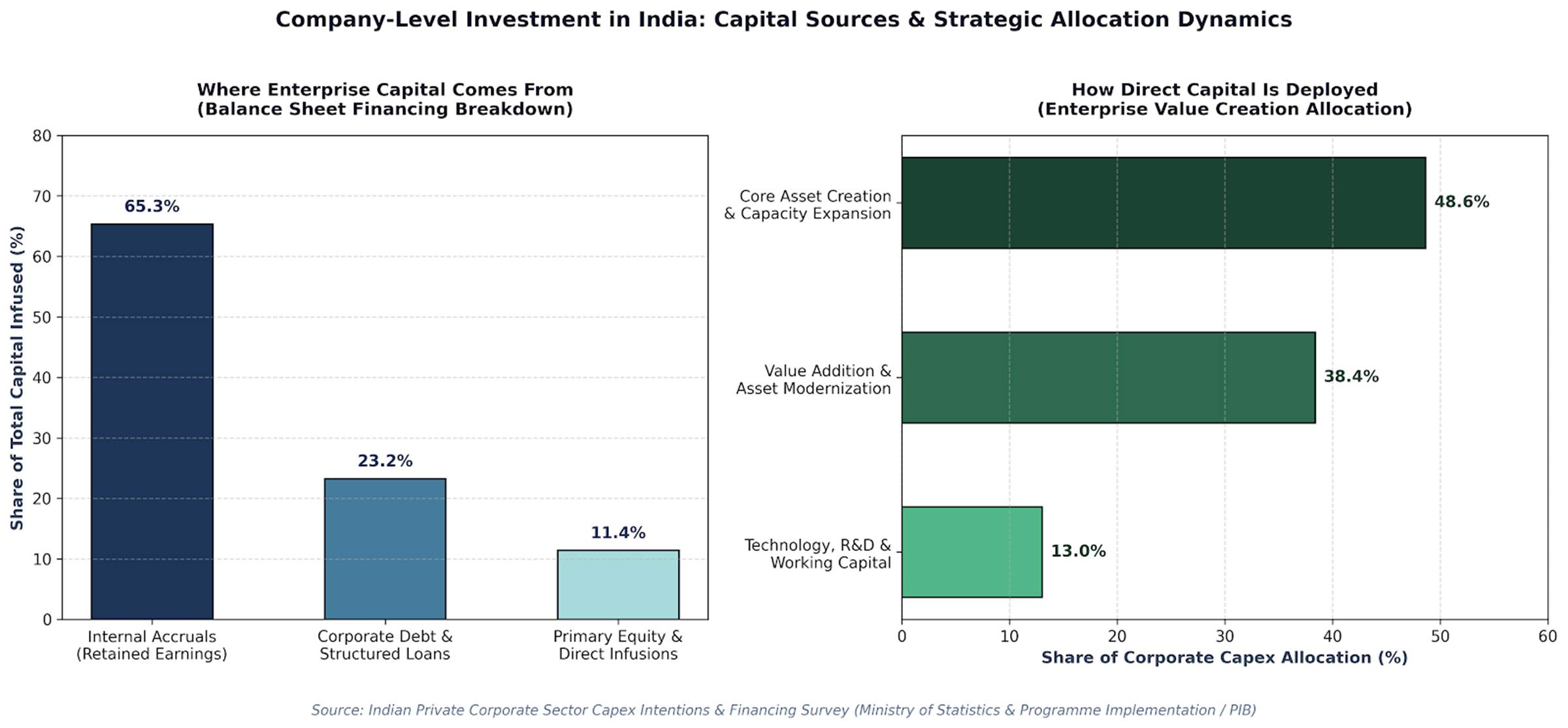
A: Internal accruals are profits retained within the business. Companies reinvest these funds directly into operational expansion or technology without raising external debt or diluting equity.
Q3: Is foreign capital permitted for direct company investment in India?
A: Yes. Foreign investors can deploy capital directly via the Foreign Direct Investment (FDI) route, subject to sector-specific guidelines, RBI reporting, and FEMA regulations.
Frequently Asked Questions (FAQs)
What instruments are commonly used for direct company-level investments in India?
Primary equity shares, Compulsorily Convertible Preference Shares (CCPS), Compulsorily Convertible Debentures (CCDs), and structured Non-Convertible Debentures (NCDs) are standard.
Can small businesses and MSMEs access company-level investment?
Yes. MSMEs frequently receive direct entity investments through angel investors, government-backed venture funds, private equity firms, or specialized MSME equity platforms.
How do investors realize capital returns from unlisted entities?
Common exit routes include Initial Public Offerings (IPOs), strategic corporate acquisitions, secondary sales to investment funds, or structured promoter buybacks.
Conclusion
Company-level investment in India remains a vital mechanism for fueling corporate expansion, building durable assets, and generating long-term economic value. By directing primary capital straight to operating balance sheets, enterprises gain the resources needed to scale while investors gain direct access to India's real economic expansion.
General information only. This article is not an offer, investment recommendation or substitute for independent professional advice.